Heading into 2026, the noise around an “AI Bubble” has been deafening. Yet, in the quiet of the boardroom, a different story is being told.
According to the latest survey research from Harvard Business Review, executives are not pulling back. They are doubling down.
The vast majority of leaders surveyed report that AI remains a “high priority” for their organization. They plan to spend more, not less. And crucially, they define their AI investments as already delivering “measurable business value.”
On the surface, the party continues. High valuations, rising stock prices, and a construction boom in data centers all suggest a technology that has crossed the chasm.
But beneath the bullish sentiment lies a critical divergence: The capital is ready, but the organizations are not.
The Value Paradox: Cost vs. Transformation
The survey indicates that companies are seeing “value.” But what kind of value?
For many, 2023-2025 was the era of “Low-Hanging Fruit”—replacing support tickets with chatbots and summarising meetings with LLMs. This value is real, but it is linear. It cuts costs (Cost Cutting), but it rarely creates new revenue streams or defensible competitive advantages.
As we enter 2026, the mandate has shifted. The goal is no longer just “efficiency”; it is autonomous execution.
The New Bottleneck: Not Compute, But Culture
The survey highlights a persistent struggle: human and organizational readiness.
Buying H100s is easy. Deploying models is increasingly commoditized. But asking a workforce of 10,000 people to change how they work—to shift from “doing the work” to “managing the agents doing the work”—is a massive cultural hurdle.
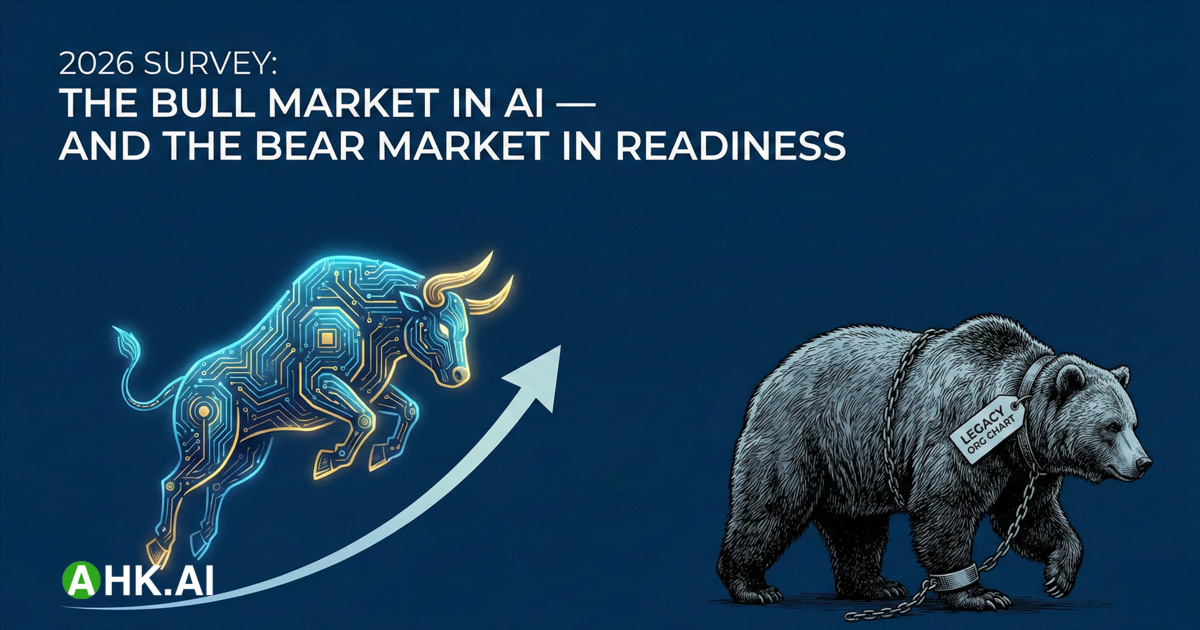
This is the “Bear Market” in readiness.
Organizations are attempting to run net-new operating models on legacy org charts. They are installing jet engines on horse carriages. The result isn’t speed; it’s structural failure.
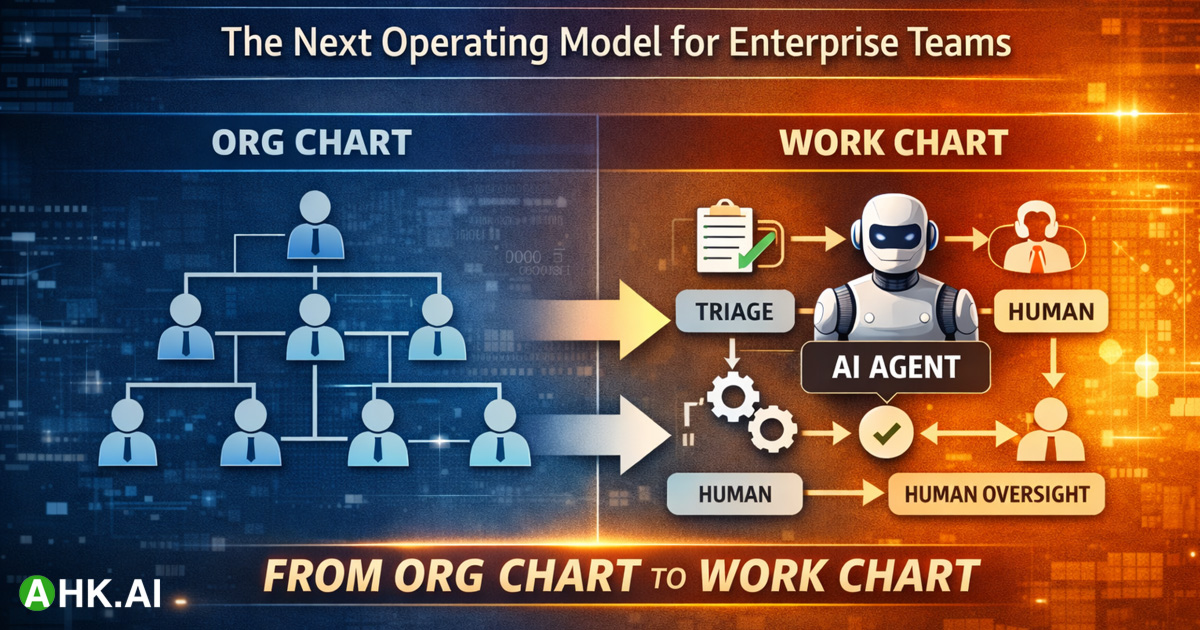
The AHK.AI View: From “Buying AI” to “Building the Work Chart”
The strategy can no longer be “buy more tech.” The winner of the next cycle will not be the company with the smartest model, but the company with the most coherent Work Chart (a shift some teams describe as moving from org charts to work-driven maps of execution). For background, see: From org charts to work charts.
1. Governance is the Product
As agents move from “chatting” to “executing” (processing refunds, approved POs, deploying code), governance stops being a compliance checklist and becomes a core product feature.
In practice, that means anchoring governance to recognized frameworks and standards:
- NIST AI Risk Management Framework (AI RMF) for risk functions and control language.
- ISO/IEC 42001:2023 for building an AI management system (AIMS) that is auditable and improvable.
You also need a “Digital Labor Owner” for every agentic workflow—an accountable role with authority over scope, guardrails, and outcomes.
2. The Rise of the “AI-Native Execution Layer”
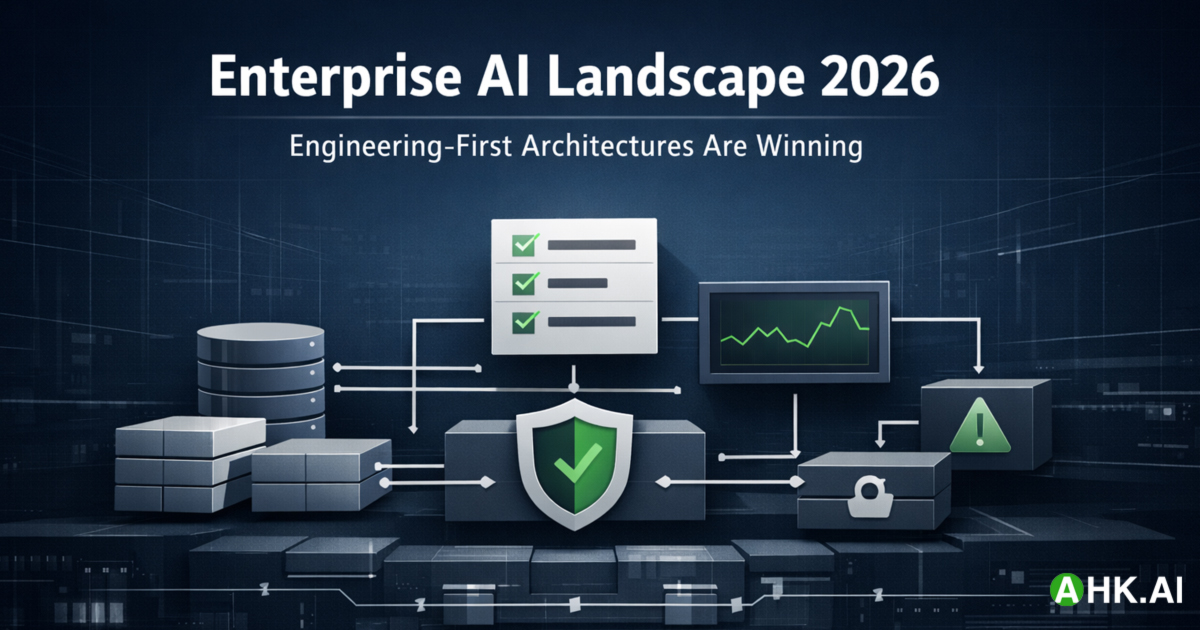
You cannot patch AI onto 20-year-old middleware. The leaders of 2026 are building a dedicated Execution Layer—software designed to orchestrate agents, enforce logic, and maintain a rigorous audit trail of every machine action.
If the organization already has a strategy narrative but lacks operating reality checks, pair this with: Match Your AI Strategy to Your Organization’s Reality (HBR).
Conclusion
The 2026 HBR survey confirms that the AI revolution is not slowing down. The checkbooks are open.
But capital alone will not solve the readiness gap. The organizations that thrive in 2026 will be those that stop treating AI as a “tool” to be deployed, and start treating it as a new workforce to be led.
Is your organization ready to close the readiness gap? Book a Strategy Call with the AHK.AI team to build your roadmap for the AI-native enterprise.